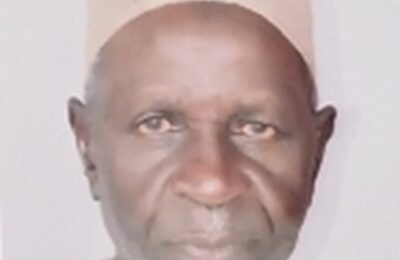
By Musa Bakare.
In the theatre of Nigerian politics, where noise makers mistake volume for strategy and accidental politicians stumble into positions they cannot manage, one leader stands miles above the crowd: Asiwaju Bola Ahmed Tinubu. He is not an accidental president. His rise was not luck, not coincidence, and certainly not political charity. It was the inevitable outcome of strategic brilliance, political courage, and decades of deliberate preparation.
Those who still underestimate his capacity expose their ignorance of Nigeria’s political evolution. Nothing about Asiwaju Tinubu’s ascent was accidental. Accidental leaders don’t survive military persecution. Accidental leaders don’t build political armies. Accidental leaders don’t assemble structures that stretch from Lagos Island to every polling unit in Nigeria.

President Tinubu’s journey has always been intentional, methodical, and anchored on a visionary blueprint far beyond the comprehension of his loudest critics.
From the NADECO trenches to the battlefronts of pro-democracy activism, from transforming Lagos into West Africa’s economic engine to building the strongest political coalition in modern Nigerian history, Asiwaju Tinubu earned every stripe. He fought for democracy when many of today’s social media activists were mere spectators. He built leaders while others destroyed institutions. He studied power, built power, and mastered power long before stepping into Aso Rock.
That is not accident. That is architecture.
As 2027 draws closer and political pretenders scramble for relevance, one fact remains non negotiable: Tinubu is not done. His reforms are bold and necessary, the only path capable of dragging Nigeria out of decades of economic decay inflicted by previous administrations.
Today’s opportunistic critics however, many of whom contributed nothing to nation-building, attack reforms they lack the intellect or discipline to understand.
Governance is not guesswork. It is not activism. It is not content creation. Governance is structure, sacrifice, and statecraft, and Asiwaju embodies all three with unmatched depth.
The opposition may wail, fabricate, distort, or hallucinate about 2027. Political mathematics is not emotional. There is no vacancy in Aso rock for incompetence, no vacancy for opportunism, and certainly no vacancy for accidental politicians.
President Tinubu’s mandate is marching toward 2031 with the force of inevitability.
In 2023, Nigerians did not mistakenly choose Bola Ahmed Tinubu. They deliberately chose a warrior of democracy, a builder of men, a master of political engineering, a leader who plans in decades, not election cycles.
By 2027, Nigerians will witness the full bloom of reforms that began in 2023. The economy will stabilize. Infrastructure will expand. Institutions will strengthen. And those who mocked will bow to results. History has always vindicated courageous leaders and punished timid ones.
Tinubu’s presidency is not the product of chance. It is destiny reinforced by preparation, vision fortified by sacrifice, and governance powered by strategic excellence.
Come 2027, history will speak louder than the noise of his opponents. ASIWAJU TILL 2031
– Musa Asiru Bakare is a member of the APC and a political analyst. He writes from Lokoja, Kogi State.