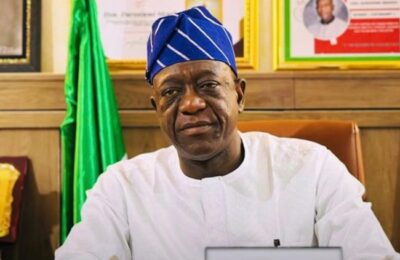

By Musa Bakare.
Political narratives may be rewritten in seasons of rivalry, but history is stubborn. Claims, counterclaims, and campaign storytelling cannot erase documented facts or dismantle recorded timelines. Noise may trend; truth endures.
As the countdown to 2027 accelerates, it is necessary to restate plainly who formed the All Progressives Congress, how it emerged, and why its origin story will continue to define Nigeria’s political battlefield. This is not nostalgia. It is context. And in politics, context is power.

The APC was not born from the personal ambitions of Atiku Abubakar or Nasir El-Rufai or anyone in today’s opposition for that matter. It was the product of a historic coalition engineered in 2013 under the strategic direction of Asiwaju Bola Ahmed Tinubu, when four major opposition parties, the Action Congress of Nigeria, the Congress for Progressive Change, the All Nigeria Peoples Party, and a faction of the All Progressives Grand Alliance merged into one political machine to confront an incubent ruling party.
That merger was not routine politics; it was a calculated political earthquake. Nigeria had never witnessed an opposition alliance of such magnitude, discipline, and geographic reach. It required negotiations across regions, ideologies, ambitions, and zeal. Governors supplied structure. Legislators supplied legitimacy. Organizers supplied machinery. Grassroots mobilizers supplied energy. But above all, strategy supplied victory and strategy had a driver.
Top of the merger’s architects, Asiwaju Tinubu stood out as the principal tactician who welded scattered fragments into a unified electoral weapon. Where others saw differences, he saw arithmetic. Where skeptics predicted collapse, he wielded coordination. Where rivals competed, he constructed alignment. The merger was not luck. It was design.
The outcome validated the blueprint: the 2015 general election produced Nigeria’s first democratic transfer of power from a ruling party to an opposition party, a watershed moment that altered the trajectory of the Fourth Republic and gave teeth to the Renewed Hope for Nigeria.
Today, as political temperatures rise again, revisionist narratives have begun circulating, attempting to dilute or distort that record. Alhaji Abubakar Atiku has expressed regret in his own role in the political shift that ousted the PDP, despite not being among the merger’s principal architects. Such statements reflect a familiar pattern: when history becomes inconvenient, some attempt to edit it. But history is not a campaign billboard to be redesigned overnight; it is a ledger written in permanent ink.
The deeper lesson from the APC story is blunt and unromantic: power is never accidental. It is strategically negotiated and tested in structures, refined in strategy, and delivered through organization.
Elections are not won by rhetorics; they are won by networks, planning, discipline, and timing. Volume may dominate television screens, but structure dominates ballot boxes.
Nigeria’s democratic evolution depends not only on competition but on memory. Nations that forget how their turning points happened risk misunderstanding how future ones will unfold. Accuracy about political history is therefore not a luxury for politicians; it is a necessity for citizens.
As 2027 approaches, the message is simple and unsentimental: narratives may shift, alliances may realign, and slogans may change, but facts remain sacred. And facts, unlike propaganda, do not expire.
– Musa Asiru Bakare, a foundational APC member and political analyst, writes from Lokoja.