
Nigeria’s democratic future will be determined less by campaign showmanship and more by constitutional engineering. As 2027 approaches, the central concern is no longer merely who will secure electoral victory, but whether the structural design of key institutions can withstand executive gravitational pull. Public confidence in elections weakens when appointment authority and oversight power appear concentrated within the same political orbit. In such an atmosphere, outcomes are interpreted not strictly as procedural conclusions but as manifestations of influence. The health of the republic depends on whether credibility can be insulated from incumbency.
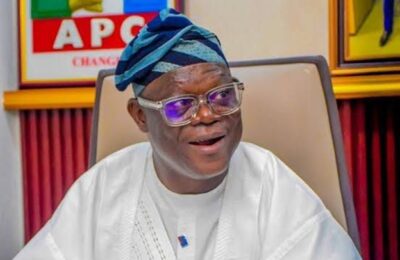
In response to this anxiety, Onuoha asserts:
The problem of election in Nigeria is obvious. The president appoints the INEC chairman, the president appoints the AGF. These two serious positions decide election, and cannot decide against the boss. The solution is simple, remove these powers from the president, otherwise the dream of these institutions being independent, remain a mirage. The jurisdiction of Commander In Chief should be within the security institutions and not extending civil institutions. That’s how it’s in places like America and other developed nations.”
His intervention is unambiguous. It frames the dilemma as one of structural conflict, arguing that independence cannot coexist with hierarchical dependence.

Admittedly, constitutional presidential systems often grant appointment authority to the executive. The President nominates the leadership of the Independent National Electoral Commission and the Attorney General of the Federation, subject to legislative confirmation. Yet while legality may be intact, legitimacy operates at a different threshold. When electoral disputes emerge, perception becomes decisive. Even where office holders act with integrity, the optics of executive proximity create skepticism. Democratic systems thrive not only on lawful design but also on visible impartiality.
Comparative experience further illuminates the debate. In the United States, although the President appoints the Attorney General, electoral administration is significantly decentralized across states, thereby dispersing authority. In the United Kingdom, the Electoral Commission operates independently of direct executive command through parliamentary mechanisms. Similarly, in South Africa, the Electoral Commission of South Africa is constituted through a multiparty parliamentary process supported by judicial participation. These examples demonstrate that credibility flourishes where appointment power is diffused and institutional autonomy is protected through layered safeguards.
Consequently, the reform conversation should move beyond personalities and focus on architecture. Removing appointment authority outright may not automatically guarantee neutrality; however, redistributing influence through transparent nomination councils, public vetting, and security of tenure could strengthen independence. Budgetary autonomy charged directly to the Consolidated Revenue Fund would further minimize fiscal leverage. Such recalibration would not diminish presidential authority but rather refine its constitutional boundaries. A Commander in Chief whose mandate is concentrated within national defense and security enhances clarity, whereas extension into civil regulatory oversight generates suspicion.
Moreover, democratic consolidation requires cultural recalibration alongside structural reform. Political rhetoric must transition from inevitability claims to policy articulation. Citizens must recognize that electoral outcomes are products of organization, coalition building, and strategic competence rather than destiny. When public reasoning replaces emotive storytelling, participation becomes substantive rather than ceremonial. Institutional trust deepens when voters understand procedures and chain of custody, thereby reducing conspiratorial assumptions.
Ultimately, the matter can be expressed succinctly. Nigeria must decide whether sovereignty resides primarily in durable institutions or in transient office holders. Where systems are robust, individuals cannot easily distort outcomes. Where systems are fragile, even upright leaders struggle to inspire confidence. The path toward 2027 therefore demands constitutional recalibration, procedural transparency, and civic maturity. The republic does not require spectacle; it requires structural integrity strong enough that no electoral outcome appears predetermined.
– Inah Boniface Ocholi writes from Ayah – Igalamela/Odolu LGA, Kogi state.
08152094428 (SMS Only)