
By Abubakar Ojima-ojo Yunusa
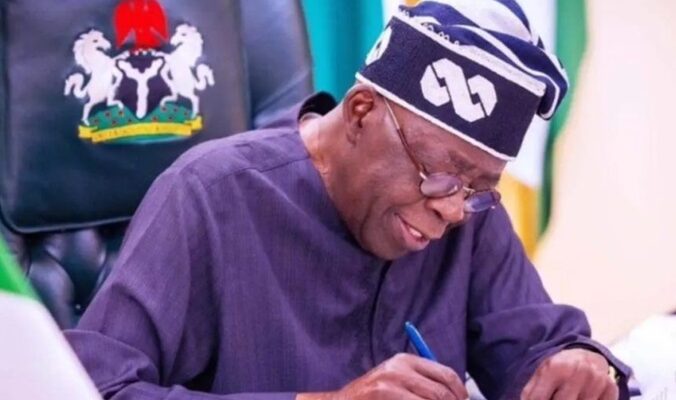
On a humid afternoon in Abuja, a small insurance broker checked his phone repeatedly, refreshing news updates. When confirmation came that President Bola Tinubu had signed the Insurance Industry Bill into law, it felt personal.
“At least now, there’s clarity,” he said quietly. For many Nigerians, 2025’s legislative journey was not an abstract tussle between arms of government, but a process with real consequences for livelihoods, taxes and public institutions.

Arguably, 2025 marked a defining chapter in the relationship between the executive and the 10th National Assembly. It was a year of cautious cooperation — one in which lawmakers passed ambitious bills, and the President signed some while firmly rejecting others.
The pattern was clear. Tinubu backed legislation he believed aligned with fiscal discipline, economic reform and national interest. Where he sensed overlaps, financial risks or policy conflicts, he applied the brakes.
Supporters see prudence. Critics see excessive control. Either way, the outcome has reshaped Nigeria’s legal and economic landscape.
Laws signed, signals sent
One of the most notable assents came in August, when Tinubu signed the Insurance Industry Bill into law. The legislation aims to strengthen regulation, improve consumer protection and boost investor confidence in a sector long plagued by weak enforcement and low public trust.
Presidential spokesman, Bayo Onanuga, described the move as a signal of intent.
“This development reaffirms the administration’s commitment to financial stability, economic development, and inclusive growth,” he said.
Industry analysts agree that the law could deepen insurance penetration, currently estimated at below one per cent, and unlock long-term capital for the economy.
Earlier, in June, Tinubu assented to the Fiscal Responsibility and Tax Reforms Bill, 2025 — perhaps the most politically sensitive legislation of the year.
The law seeks to unify Nigeria’s fragmented tax system, improve revenue collection and widen the tax base, while offering targeted relief to low-income earners and small businesses.
For Tinubu, the bill was about resetting priorities.
“For too long, our tax system has been a patchwork — complex, inequitable, and burdensome,” he said. “It has weighed down the vulnerable and shielded inefficiency. That era ends today.”
The President described the reforms as the first major pro-people tax cuts in a generation, framing them as both an economic and moral intervention.
Where the pen stopped
Yet, not all bills made it past the President’s desk.
In June, Tinubu declined assent to the National Assembly Library Trust Fund Bill, despite its passage by both chambers. The bill sought to modernise and expand library services, but the President flagged concerns about funding, taxation and conflicts with existing laws.
“Notwithstanding the laudable objectives of the legislation, certain provisions go against settled law and policies,” he wrote to the National Assembly leadership.
He warned that signing it could establish “an unsustainable precedent against the public interest”.
A similar fate met the NDLEA Establishment Bill, also declined in June. Tinubu objected to provisions allowing the agency to retain proceeds from drug-related crimes, insisting that all such funds must remain under central government oversight.
“There is no compelling reason to change the current process, which promotes transparency,” the President said.
In October, the Nigerian Institute of Transport Technology (Establishment) Bill 2025 was withheld over what Tinubu described as “fundamental defects”. He rejected a proposed one per cent levy on freight imports and exports, calling it an unauthorised charge outside approved revenue frameworks.
He also faulted clauses that removed presidential approval for borrowing and allowed the institute to invest public funds in securities.
“A publicly funded body should not engage in speculative investment,” Tinubu argued, warning of potential financial abuse.
Power, balance and national implications
For governance experts, the 2025 legislative record reflects a broader struggle over power and accountability. The National Assembly has shown willingness to advance bold proposals, while the executive has asserted its gatekeeping role over fiscal and policy coherence.
“This is not necessarily confrontation,” said a constitutional analyst in Abuja. “It is a test of boundaries — who controls spending, who defines reform, and how far autonomy should go.”
For Nigerians, the implications are tangible. Tax reforms affect household incomes. Regulatory laws shape investor confidence. Rejected bills delay institutional development but may also prevent future fiscal crises.
As 2025 draws to a close, one lesson stands out: lawmaking is no longer a rubber-stamp exercise. Between assent and restraint, Tinubu and the 10th National Assembly have set a tone — cautious, contested, but consequential.
And for citizens watching from outside the chambers, the hope remains that this careful dance ultimately delivers laws that work, not just laws that pass.